
Call us now :08045477157
 Send Inquiry
 Send Inquiry
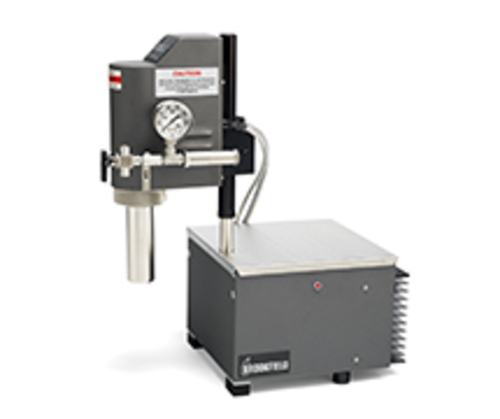
RSO Oscillatory Rheometer
MOQ : 1 Piece
RSO Oscillatory Rheometer Specification
- Capacity
- Sample volume up to 300 ml
- Pressure Range
- Atmospheric Pressure
- Sensor Type
- Rotational/oscillatory sensor
- Measurement Range
- 0.01 to 1000 Pa·s (viscosity)
- Temperature Range
- 0°C to 120°C
- Resolution
- 0.001 Pa·s
- Connectivity Type
- USB and RS232
- Current Range
- 0.1 A to 1 A
- Frequency
- 0.01 Hz to 100 Hz
- Humidity %
- 10% to 90% RH (operating)
- Equipment Type
- Oscillatory Rheometer
- Material
- Stainless Steel & ABS Body
- Power Supply
- 230V AC / 50Hz
- Power Consumption
- 30 W
- Accuracy
- ±1% (with reference standards)
- Display Type
- LCD Digital Display
- Range
- 0.01 to 1000 Pa·s
- Sample Volume
- 0.5 mL to 5 mL
- Cooling/Heating System
- Peltier Plate and Liquid Temperature Control
- Compliance
- CE, ISO 9001:2015 certified
- Dimensions
- 500 mm x 350 mm x 400 mm
- Operating Modes
- Steady, Oscillatory, Creep, Stress Relaxation, Frequency Sweep
- Data Storage
- 8 GB internal memory, expandable via USB
- Sample Holders
- Cone-plate, Parallel-plate, Cup-and-bob
- Weight
- 24 kg
- Shear Rate Range
- 0.001 s1 to 1000 s1
- Software Compatibility
- Windows 7/8/10, Proprietary Analytical Software
- Torque Range
- 0.01 Nm to 200 mNm
RSO Oscillatory Rheometer Trade Information
- Minimum Order Quantity
- 1 Piece
- Supply Ability
- 5 Pieces Per Day
- Delivery Time
- 2-6 Week
- Main Domestic Market
- Chandigarh, Punjab, Delhi, Haryana, Himachal Pradesh, Rajasthan, Uttar Pradesh, Uttarakhand
About RSO Oscillatory Rheometer
Viscoelastic measurements provide R&D users with advanced testing capabilities
Flexibility allows cone/plate and concentric cylinder in a single instrument
Stand-alone mode with easy-to-use interface makes it simple for QC Users
Quick Test functionality allows for testing within minutes
Comprehensive Rheological Analysis
The RSO Oscillatory Rheometer offers precise and versatile measurement modes, including steady, oscillatory, creep, stress relaxation, and frequency sweep. Its advanced rotational/oscillatory sensor technology and variety of sample holders (cone-plate, parallel-plate, cup-and-bob) ensure compatibility with a diverse range of material types, making it especially useful for industries such as polymers, food, pharmaceuticals, and coatings.
Advanced Thermal Control & Data Handling
With dual temperature regulation systems (Peltier Plate and Liquid Temperature Control), this rheometer accurately maintains sample temperatures from 0C to 120C. The instruments 8 GB internal memory expandable via USB and software compatibility with Windows 7/8/10 ensure reliable, user-friendly data management and analysis for any research or industrial setting.
FAQs of RSO Oscillatory Rheometer:
Q: How does the RSO Oscillatory Rheometer maintain precise temperature control during measurements?
A: The rheometer utilizes both a Peltier Plate and Liquid Temperature Control to regulate temperatures between 0C and 120C. This dual system ensures consistent thermal conditions for all sample types, thereby improving measurement accuracy and reliability.Q: What sample volumes can be analyzed with this rheometer and how do I select the appropriate holder?
A: The instrument accommodates sample volumes from as low as 0.5 mL to 5 mL for most holders, and up to 300 mL for specific applications. Selection of cone-plate, parallel-plate, or cup-and-bob holders depends on sample viscosity, test type, and volume requirements.Q: When is it beneficial to use the oscillatory mode versus steady or creep mode?
A: Oscillatory mode is ideal for analyzing viscoelastic properties and complex material structures, while steady mode best suits viscosity measurements at constant shear. Creep mode, on the other hand, is used to assess a materials deformation under sustained stress.Q: Where can I install and operate this instrument safely?
A: The rheometer can be installed in laboratory environments that meet the following conditions: temperature-regulated space, humidity between 10% and 90% RH, atmospheric pressure, and a stable 230V AC / 50Hz power supply. Its robust stainless steel and ABS construction ensures durability in most research and industrial labs.Q: What is the process for storing and exporting measurement data for analysis?
A: Test results are automatically saved to the 8 GB internal memory. Users can expand storage with a USB device or transfer data through USB and RS232 connectivity to compatible Windows systems for further analysis using the supplied proprietary analytical software.Q: How does using this rheometer benefit material research and quality control?
A: With high torque and shear rate resolutions, multi-modal testing, and 1% accuracy, the instrument delivers comprehensive insights into material properties. These capabilities accelerate product development, optimization, and quality assurance in various industries.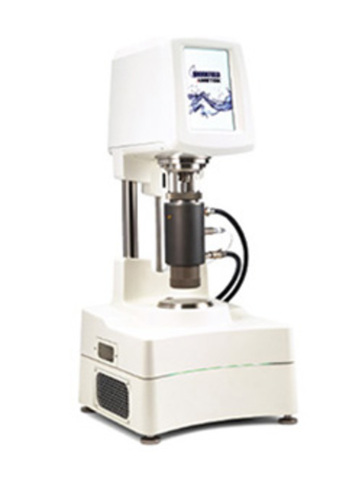
Tell us about your requirement

Price:
Quantity
Select Unit
- 50
- 100
- 200
- 250
- 500
- 1000+
Additional detail
Mobile number
Email

More Products in Rheometers Category
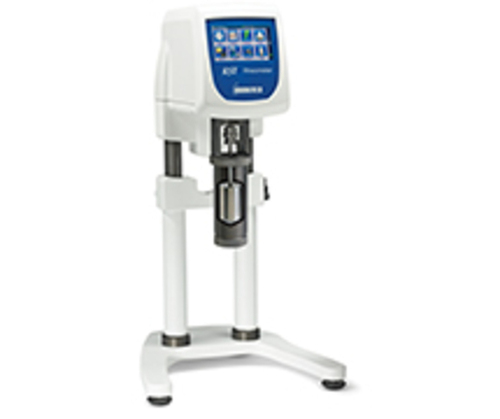
RST Coaxial Cylinder Rheometer
Price Range 300000.00 - 600000.00 INR / Piece
Minimum Order Quantity : 1 Piece
Accuracy : 1% of measuring value
Temperature Range : 0C to +180C with Peltier or temperature control
Connectivity Type : USB, Ethernet
Resolution : 0.1 rpm (speed); 0.1 mNm (torque)
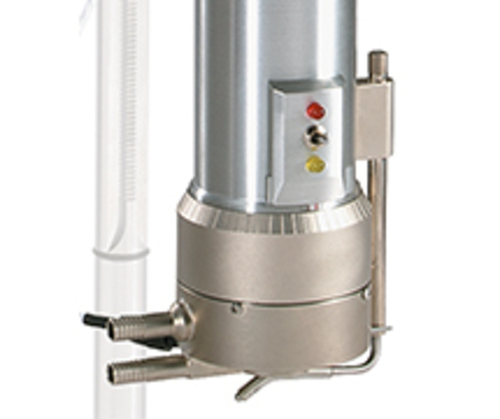
Cone Plate Wells Brookfield Rheometer
Price Range 300000.00 - 600000.00 INR / Piece
Minimum Order Quantity : 1 Piece
Accuracy : 1% of full scale
Temperature Range : 5C to 100C (with external bath)
Connectivity Type : RS232/USB output
Resolution : 0.01 cP
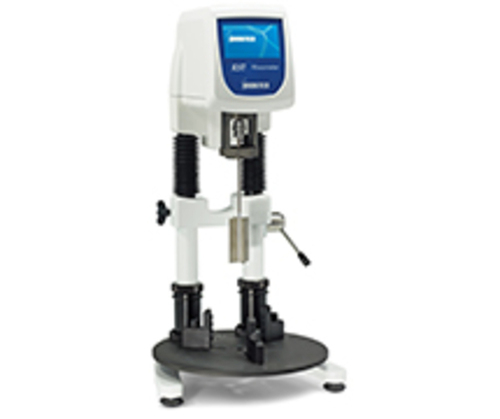
RST Soft Solids Tester Rheometer
Price Range 300000.00 - 600000.00 INR / Piece
Minimum Order Quantity : 1 Piece
Accuracy : 0.5% of full scale
Temperature Range : 5C to 90C (Peltier plate optional)
Connectivity Type : USB and Ethernet
Resolution : 0.001 rpm
PVS Rheometer
Price Range 300000.00 - 600000.00 INR / Piece
Minimum Order Quantity : 1 Piece
Accuracy : 0.5%
Temperature Range : Ambient to 200C
Connectivity Type : USB, RS232 interface
Resolution : 0.001 Pas


 Send Inquiry

Our Products
- Lovibond Colour Measurement Instruments
- Lovibond Water Testing Equipments
- Water Purification Systems
- SOCOREX Precision Liquid Volumetry
- Laboratory Viscometers
- Rheometers
- BLUESEN SMART WATER ANALYZERS
- Testing and Measuring Equipment
- Online Turbidity Meter
- Electrical Testing and Measuring Equipment
- Multifunction Meter
- Measuring tools and Equipment
- Digital Sensor

Plot No. 6, Club Drive, M.G. Road, GhitorniNew Delhi - 110030, India

Mr Sumit Bhatia
(Director)
Mobile :08045477157
 Send Inquiry
 Send SMS
Developed and Managed by Infocom Network Private Limited.
 English
 Spanish
 French
 German
 Italian
 Chinese (Simplified)
 Japanese
 Korean
 Arabic
 Portuguese