
Call us now :08045477157
 Send Inquiry
 Send Inquiry
RST Soft Solids Tester Rheometer
MOQ : 1 Piece
RST Soft Solids Tester Rheometer Specification
- Protection
- IP20
- Sensor Type
- Rotational, cone-plate, parallel plate, vane
- Pressure Range
- Atmospheric
- Capacity
- up to 50 mNm (torque)
- Application Media
- Gels, creams, pastes, soft solids
- Humidity %
- 10% to 80% RH (non-condensing)
- Temperature Range
- 5C to 90C (Peltier plate optional)
- Connectivity Type
- USB and Ethernet
- Measurement Range
- 0.01 Pas to 100,000 Pas (Viscosity)
- Resolution
- 0.001 rpm
- Diameter
- 25 mm plate standard
- Equipment Type
- Rheometer
- Material
- Stainless Steel and Aluminum
- Power Supply
- 110-240V AC, 50/60Hz
- Power Consumption
- 40 W
- Accuracy
- 0.5% of full scale
- Display Type
- 7 Touchscreen LCD
- Range
- 0.01 to 100 s-1 (Shear Rate)
- Compliance
- CE Certified
- Weight
- 14 kg
- Torque Range
- 0.05 Nm to 100 mNm
- Sample Temperature Control
- Optional Peltier Plate or Circulating Bath
- Software
- Included for advanced rheological analysis
- USB Ports
- 2
- Data Output Format
- CSV, PDF
- Stand Type
- Motorized lift
- Dimensions (W x D x H)
- 350 x 350 x 520 mm
- Data Storage
- Internal memory expandable via USB
- Calibration
- Automatic and manual
- Rotational Speed Range
- 0.01 to 200 rpm
- Operating Language
- English
RST Soft Solids Tester Rheometer Trade Information
- Minimum Order Quantity
- 1 Piece
- Supply Ability
- 5 Pieces Per Day
- Delivery Time
- 2-6 Week
- Main Domestic Market
- Chandigarh, Punjab, Delhi, Haryana, Himachal Pradesh, Rajasthan, Uttar Pradesh, Uttarakhand
About RST Soft Solids Tester Rheometer
The RST-SST is a high end, touch screen rheometer that uses vane spindle geometry in both controlled stress and controlled rate modes to characterize creep behavior as well as yield stress and viscosity profiles.
Advanced Measurement Precision
Leveraging a torque range from 0.05 Nm to 100 mNm and an accuracy of 0.5% of full scale, the RST Soft Solids Tester Rheometer delivers exacting results for both low and high viscosity samples. The inclusion of multiple sensor types-rotational, cone-plate, parallel plate, and vane-supports a variety of test methodologies, addressing the needs of laboratories and industrial settings alike.
Streamlined Data Management
With internal memory, two USB ports, and Ethernet connectivity, managing and exporting data is effortless. Users can store comprehensive measurement results and export them directly in CSV or PDF formats, simplifying reporting and analysis. The device's software provides advanced analytical tools, enhancing the depth of rheological insights obtained from each test.
Versatile and Easy Operation
The motorized lift stand, intuitive 7" touchscreen LCD, and multi-language support contribute to user-friendly operation. Optional temperature control via Peltier plate or circulating bath extends application capability. Compact in size yet offering robust performance, the rheometer is suitable for use in research institutes, industrial labs, and quality control environments.
FAQ's of RST Soft Solids Tester Rheometer:
Q: How is calibration performed on the RST Soft Solids Tester Rheometer?
A: Calibration is straightforward with this instrument, as it supports both automatic and manual calibration options operated via the touchscreen interface, ensuring reliable, traceable results before commencing measurements.Q: What types of samples and applications is the RST Rheometer suitable for?
A: Designed for soft solids, the rheometer is ideal for analyzing gels, creams, pastes, and similar materials, making it well-suited for research, quality assurance, and product development in cosmetics, pharmaceuticals, food, and industrial products.Q: When should I use the optional Peltier Plate or Circulating Bath for temperature control?
A: Temperature control becomes important when analyzing the rheological properties of samples that are sensitive to temperature changes. Use the optional Peltier Plate or Circulating Bath to maintain precise temperatures between 5C and 90C during tests.Q: Where can I access or export measurement data from this rheometer?
A: Measurement data can be stored in the rheometer's internal memory and easily expanded via USB. Data can be exported in CSV or PDF formats for further analysis or reporting, or sent via Ethernet for network integration.Q: What is the process for starting a measurement on this equipment?
A: Begin by selecting your test parameters on the 7" touchscreen, load your sample, ensure proper calibration, and start the measurement. The software guides you through the process and displays real-time results.Q: How does using the RST Rheometer benefit my workflow?
A: The instrument's high accuracy, automated features, and advanced software streamline your testing process, reduce operator intervention, and enhance throughput, ultimately improving the reliability and efficiency of your rheological analyses.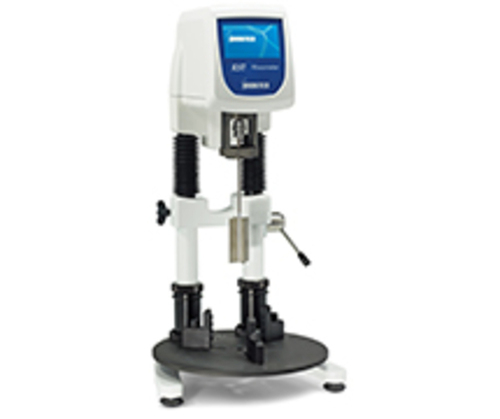
Tell us about your requirement

Price:
Quantity
Select Unit
- 50
- 100
- 200
- 250
- 500
- 1000+
Additional detail
Mobile number
Email

More Products in Rheometers Category
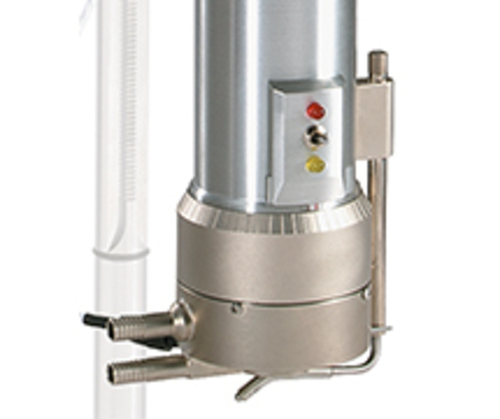
Cone Plate Wells Brookfield Rheometer
Price Range 300000.00 - 600000.00 INR / Piece
Minimum Order Quantity : 1 Piece
Temperature Range : 5C to 100C (with external bath)
Accuracy : 1% of full scale
Power Consumption : Low
Measurement Range : 0.01 to 2,000,000 cP (viscosity)
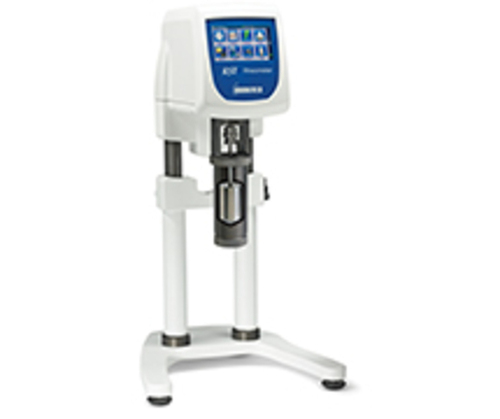
RST Coaxial Cylinder Rheometer
Price Range 300000.00 - 600000.00 INR / Piece
Minimum Order Quantity : 1 Piece
Temperature Range : 0C to +180C with Peltier or temperature control
Accuracy : 1% of measuring value
Power Consumption : Approx. 75 W
Measurement Range : 0.011500 rpm (rotation speed); 0.1300 mNm (torque)
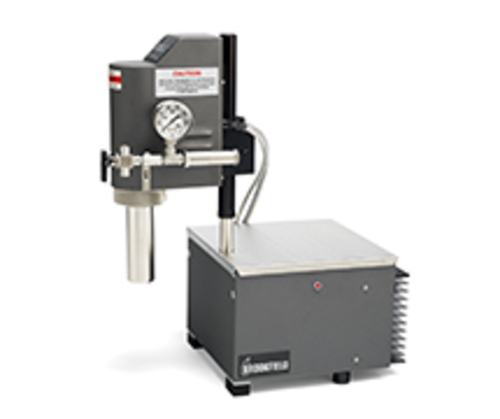
PVS Rheometer
Price Range 300000.00 - 600000.00 INR / Piece
Minimum Order Quantity : 1 Piece
Temperature Range : Ambient to 200C
Accuracy : 0.5%
Power Consumption : 100 W
Measurement Range : 0.01 100 Pas
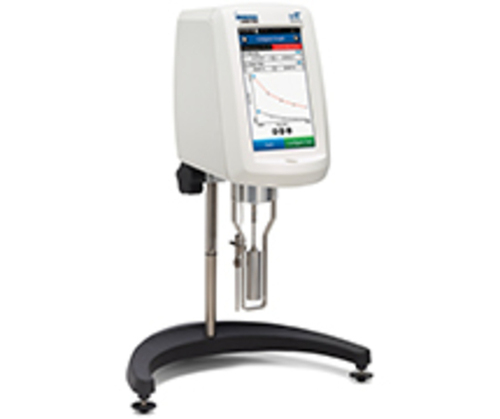
DV3T Touch Screen Rheometer
Price Range 300000.00 - 600000.00 INR / Piece
Minimum Order Quantity : 1 Piece
Temperature Range : 0 to 100 C with optional temperature probe
Accuracy : 1.0% of range
Power Consumption : 25 W max
Measurement Range : 0.3 to 38400 cP (with standard spindles)


 Send Inquiry

Our Products
- Lovibond Colour Measurement Instruments
- Lovibond Water Testing Equipments
- Water Purification Systems
- SOCOREX Precision Liquid Volumetry
- Laboratory Viscometers
- Rheometers
- BLUESEN SMART WATER ANALYZERS
- Testing and Measuring Equipment
- Online Turbidity Meter
- Electrical Testing and Measuring Equipment
- Multifunction Meter
- Measuring tools and Equipment
- Digital Sensor

Plot No. 6, Club Drive, M.G. Road, GhitorniNew Delhi - 110030, India

Mr Sumit Bhatia
(Director)
Mobile :08045477157
 Send Inquiry
 Send SMS
 Call Me Free
Developed and Managed by Infocom Network Private Limited.
 English
 Spanish
 French
 German
 Italian
 Chinese (Simplified)
 Japanese
 Korean
 Arabic
 Portuguese