
Call us now :08045477157
 Send Inquiry
 Send Inquiry
Single Beam Spectrophotometer
MOQ : 1 Box
Single Beam Spectrophotometer Specification
- Connectivity Type
- RS232 interface for PC connectivity
- Frequency
- 50/60Hz
- Capacity
- Standard 10 mm cuvette holder
- Resolution
- 0.1%T, 0.001A, 1 nm
- Sensor Type
- Silicon photodiode detector
- Humidity %
- Less than 85% RH
- Measurement Range
- 0-200%T, -0.3 to 3A, 0-1999C
- Temperature Range
- Room temperature operation
- Material
- Metal and high-quality plastic body
- Power Supply
- AC 220V 10%, 50/60Hz
- Power Consumption
- 30W
- Accuracy
- 0.5%T
- Display Type
- 4-digit LED display
- Range
- 190-1000 nm
- Wavelength Accuracy
- 2 nm
- Equipment Type
- Single Beam Spectrophotometer
- Net Weight
- 8 kg
- Stray Light
- 0.3%T @ 220nm, 360nm
- Light Source
- Tungsten Halogen & Deuterium Lamp
- Dimensions
- 420 x 340 x 180 mm
- Sample Holder Capacity
- Up to 4 cells
- Data Output
- RS232C
- Path Length
- 10 mm standard
- Spectral Bandwidth
- 5 nm
- Detector
- Silicon Photodiode
- Photometric Accuracy
- 0.5% T
- Applications
- Qualitative and quantitative analysis in laboratories
- Baseline Flatness
- 0.005A
- Wavelength Repeatability
- 1 nm
Single Beam Spectrophotometer Trade Information
- Minimum Order Quantity
- 1 Box
- Supply Ability
- 20 Boxes Per Day
- Delivery Time
- 4-6 Days
- Sample Available
- Yes
- Main Domestic Market
- Uttarakhand, Uttar Pradesh, Haryana, Chandigarh, Punjab, Delhi, Rajasthan, Himachal Pradesh
About Single Beam Spectrophotometer
Single Beam Spectrophotometer is one of the most commonly utilized instruments in pathological & biochemistry laboratories. It is intended to be used for quantitative measurement of analyte in patients sample. This instrument works on principle of using Lamberts & Beers law which says that amount of light absorbed is directly proportional to the amount of solute present in sample. It is known to have table top structure and is provided with user friendly control panel. Offered Single Beam Spectrophotometer also comprises digital panel with backlit display for clear visibility. It is also utilized for various biochemical experiments that involve ENA, RNA, & proteins.
Accurate and Versatile Analysis
Achieve precise quantitative and qualitative results with advanced features like 0.5% photometric accuracy and 5 nm spectral bandwidth. The device supports a broad spectral range and provides reliable baseline flatness and low stray light, enhancing confidence in analytical outcomes for pharmaceutical, chemical, or environmental labs.
Efficient Workflow and Connectivity
Process up to four samples simultaneously with the multi-cell holder, optimizing laboratory efficiency. The RS232C output enables swift data transfer to computers, simplifying reporting and record-keeping. The 4-digit LED display ensures clear readings, while intuitive controls make operation straightforward for users of varying experience levels.
FAQs of Single Beam Spectrophotometer:
Q: How does the spectrophotometer ensure accurate wavelength measurements?
A: The instrument maintains wavelength accuracy of 2 nm and repeatability of 1 nm through its advanced optical system, dual light sources, and precise silicon photodiode detector, ensuring consistent and reliable results for diverse laboratory analyses.Q: What kind of samples can be analyzed with this spectrophotometer?
A: It is ideal for qualitative and quantitative analysis of liquids, solutions, or suspensions in laboratory settings. Its standard 10 mm cuvette holder accommodates up to four sample cells, supporting a wide range of laboratory applications, including pharmaceutical, biochemical, and environmental testing.Q: When should baseline flatness and stray light levels be checked?
A: Baseline flatness (0.005A) and stray light (0.3%T at 220 nm, 360 nm) should be evaluated periodicallypreferably before each measurement session or as part of routine calibrationto ensure data integrity and instrument reliability.Q: Where can the data output from the spectrophotometer be directed?
A: All measurement data generated by the spectrophotometer can be transmitted to a connected PC or laboratory information system via the RS232C interface, allowing for easy documentation and further analysis.Q: What is the process for operating the spectrophotometer?
A: Operation involves inserting the sample into the 10 mm cuvette holder, selecting the desired wavelength, and reading the measurement on the 4-digit LED display. Data can then be exported and managed via RS232 connectivity. Routine cleaning and calibration help maintain measurement accuracy.Q: How does the spectrophotometer benefit laboratory workflows?
A: Its robust design, multi-cell sample holder, accurate measurements, and computer connectivity streamline laboratory tasks, increase throughput, and minimize data errors, ultimately enhancing productivity and analytical confidence.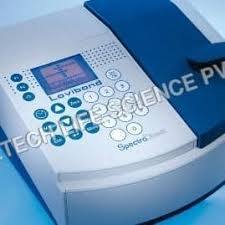
Tell us about your requirement

Price:
Quantity
Select Unit
- 50
- 100
- 200
- 250
- 500
- 1000+
Additional detail
Mobile number
Email

More Products in Lovibond Water Testing Equipments Category
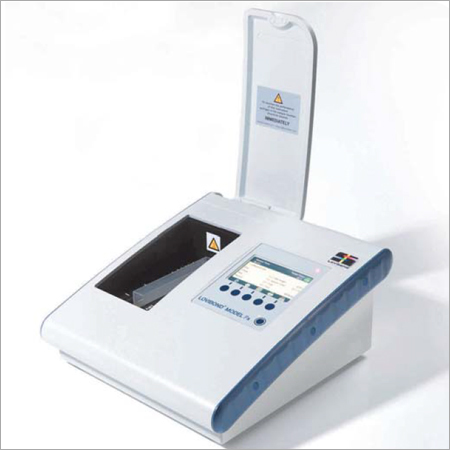
Lovibond Colour Measurement
Minimum Order Quantity : 1 Box
Temperature Range : 10C to 40C
Material : Powder Coated Metal & ABS Body
Display Type : Other, Digital LCD Display
Capacity : Single sample measurement at a time
Accuracy : 0.05 Lovibond units
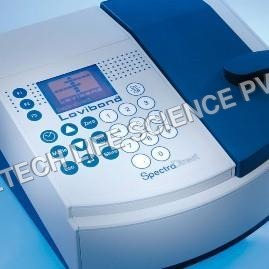
Spectrophotometer Equipments
Minimum Order Quantity : 1 Box
Temperature Range : 10C to 40C
Material : ABS Plastic & Metal
Display Type : Other, Digital LCD Display
Capacity : 4 ml (Sample Volume)
Accuracy : 0.5% T
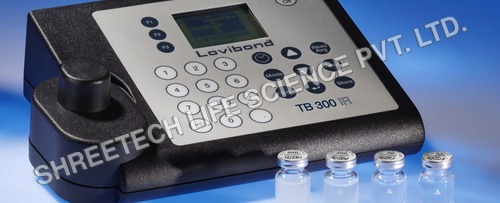
Turbidity Meter - TB 300 IR
Minimum Order Quantity : 1 Box
Temperature Range : 5C to 40C
Material : ABS plastic body
Display Type : Other, Digital LCD display
Capacity : Single cell sample, 30 mm path length
Accuracy : 2% of full scale
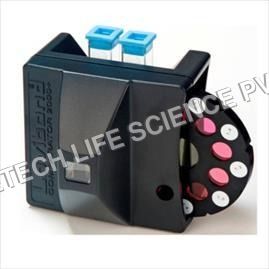
Lovibond Checkit Comparator
Minimum Order Quantity : 1 Box
Temperature Range : Ambient, 0C to 40C (for use)
Material : Highquality Plastic Body
Display Type : Other, Visual Comparator (No digital display)
Capacity : Single sample cell at a time
Accuracy : Color matching precision depends on visual assessment


 Send Inquiry

Our Products
- Lovibond Colour Measurement Instruments
- Lovibond Water Testing Equipments
- Water Purification Systems
- SOCOREX Precision Liquid Volumetry
- Laboratory Viscometers
- Rheometers
- BLUESEN SMART WATER ANALYZERS
- Testing and Measuring Equipment
- Online Turbidity Meter
- Electrical Testing and Measuring Equipment
- Multifunction Meter
- Measuring tools and Equipment
- Digital Sensor

Plot No. 6, Club Drive, M.G. Road, GhitorniNew Delhi - 110030, India

Mr Sumit Bhatia
(Director)
Mobile :08045477157
 Send Inquiry
 Send SMS
 Call Me Free
Developed and Managed by Infocom Network Private Limited.
 English
 Spanish
 French
 German
 Italian
 Chinese (Simplified)
 Japanese
 Korean
 Arabic
 Portuguese