
Call us now :08045477157
 Send Inquiry
 Send Inquiry
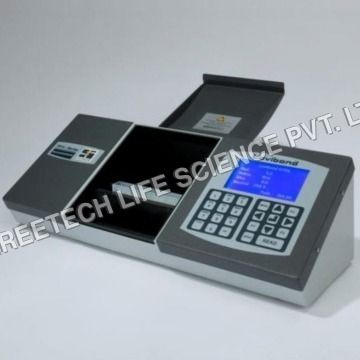
Measurement Tintometer
Price 50605.00 INR/ Box
MOQ : 1 Box
Measurement Tintometer Specification
- Application
- Color measurement in water analysis, industrial fluids, laboratory samples
- Temperature
- 5°C to 45°C operating range
- Interface Type
- Push button interface
- Frequency
- 50 Hz
- Specimen Size
- Standard cuvette 10 mm path length
- Number of Specimens
- Single cuvette
- Measuring Range
- Varies by Test (typically 0-500 ppm)
- Resolution
- 0.01 units (depending on parameter)
- Mounting Type
- Bench-top
- Max Height
- 220 mm
- Display Type
- Digital LCD
- Automation Grade
- Manual
- Power Supply
- 230 V AC, 50 Hz
- Accuracy
- ±2% of reading
- Humidity
- Up to 90% RH (non-condensing)
- Features
- Easy calibration, portable design, quick results
- Equipment Type
- Measurement Tintometer
- Response Time
- Within 5 seconds
- Operating Voltage
- 230 V AC
- Test Range
- 0 - 500 ppm (as per model)
- Usage
- For quality control and laboratory analysis
- Capacity
- Depends on test kit used
- Machine Weight
- 6.5 kg
- Test Speed
- Manual operation
- Control Mode
- Manual
- Compliance
- ISO 7027 / EN 27027
- Wavelength Range
- 400 nm - 700 nm
- Calibration
- Factory calibrated, user re-calibration option
- Protection Class
- IP20
- Sample Volume
- 10 ml per cuvette
- Light Source
- Tungsten Halogen Lamp
- Body Material
- ABS Construction
Measurement Tintometer Trade Information
- Minimum Order Quantity
- 1 Box
- Supply Ability
- 20 Boxes Per Day
- Delivery Time
- 4-6 Days
- Sample Available
- No
- Main Domestic Market
- Haryana, Punjab, Chandigarh, Rajasthan, Delhi, Himachal Pradesh, Uttarakhand, Uttar Pradesh
About Measurement Tintometer
We are instrumental in offering Measurement Tintometer which is highly recognized among clients due to its friendly interface, rugged design and modern technique. This device is widely demanded in chemicals, pharmaceutical, beverages, fuel oils and food processing industries. It is designed by utilizing optimum grade plastic material to ensure its crack proof nature. Apart from this, our offered Measurement Tintometer is widely demanded in the market due to its modern design and latest technology.
Key features:
Key features:
- Convenient to use
- Has display screen
- Featured with switch
Precision Color Measurement
Rely on precise and repeatable results for color assessment in water and fluid samples. The tungsten halogen lamp and optimized wavelength range ensure consistent measurements from 0 to 500 ppm, depending on the parameter tested. Typical accuracy of 2% and fast response time support high-quality analytical work in laboratories and industrial settings.
Simple Operation and Calibration
This measurement tintometer features user-friendly manual controls and push-button operation. Factory calibration ensures initial accuracy, and the simple re-calibration option allows for ongoing reliability. The digital LCD clearly displays readings for ease of use during all analytical procedures.
Robust Construction, Versatile Application
Designed with sturdy ABS material and a compact 220 mm bench-top body, the tintometer withstands rigorous lab conditions. Compliance with ISO 7027/EN 27027 assures reliable performance for water analysis, industrial quality control, and research laboratory environments. Its portable design and easy setup make it suitable for diverse testing needs across India.
FAQs of Measurement Tintometer:
Q: How do I operate the Measurement Tintometer for color analysis?
A: To operate the tintometer, simply fill a standard 10 ml cuvette with your sample and place it in the sample holder. Use the push-button interface to initiate a measurement. The result appears on the digital LCD within approximately 5 seconds. Operation is entirely manual, enabling precise user control throughout the testing process.Q: What kind of samples and parameters can the tintometer measure?
A: The measurement tintometer is suitable for analyzing color in water, industrial fluids, and laboratory samples. It can measure a variety of parameters within the range of 0 to 500 ppm, depending on the test kit and model selected. This versatility makes it ideal for quality control and laboratory analysis applications.Q: When is re-calibration necessary, and how is it performed?
A: The tintometer comes factory calibrated to ensure accuracy from the outset. Re-calibration by the user may be needed if there is a noticeable drift in readings or after extensive usage. Re-calibration can be performed manually as per the calibration guidelines provided with the instrument, ensuring ongoing measurement reliability.Q: Where should the Measurement Tintometer be installed?
A: Install the tintometer on a stable, bench-top surface within a controlled environment. Ensure ambient temperature stays between 5C and 45C with humidity up to 90% RH (non-condensing). The IP20 protection class is suitable for indoor laboratory, industrial, or water testing facilities only.Q: What benefits does the tintometer offer for laboratory and industrial users?
A: Laboratories and industries benefit from this tintometers high measurement accuracy, rapid results, and robust ABS construction. Its straightforward manual controls, easy calibration, and compliance with ISO standards provide reliable support for routine quality control or advanced research applications.Q: How much sample volume is required for a measurement?
A: Each test requires a single standard cuvette containing approximately 10 ml of sample. This volume ensures enough path length for reliable colorimetric analysis, consistent with standard laboratory practices.Q: What is the process for quality control using this tintometer?
A: For quality control, prepare your sample according to standard procedures and insert it into the cuvette. Place the cuvette in the instrument and follow the manual instructions to obtain a reading. The digital LCD displays results quickly, enabling you to monitor sample quality accurately and efficiently.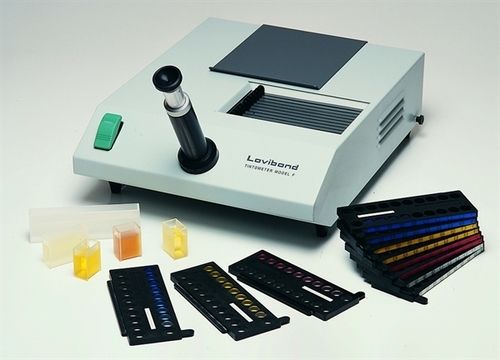
Tell us about your requirement

Price:
Quantity
Select Unit
- 50
- 100
- 200
- 250
- 500
- 1000+
Additional detail
Mobile number
Email

More Products in Lovibond Colour Measurement Instruments Category
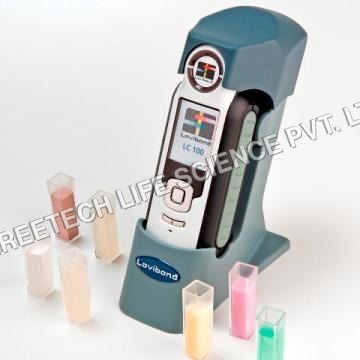
Spectrocolorimeter Tintometer
Minimum Order Quantity : 1 Box
Application : Color analysis and grading for liquids
Mounting Type : Benchtop
Control Mode : Digital touch panel
Humidity : Operating range 10% 85% RH
Display Type : LCD digital display
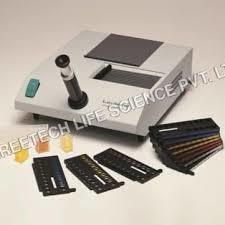
Oil Measuring Instrument
Minimum Order Quantity : 1 Box
Application : Used for precise measurement of oil quantity in industrial and laboratory settings
Mounting Type : Benchtop
Control Mode : Analog
Humidity : 10% to 90% RH (operating)
Display Type : External Graduated Scale
Color Lovibond Comparator
Minimum Order Quantity : 1 Box
Application : Color comparison and water/sample analysis
Mounting Type : Tabletop/handheld
Control Mode : Manual
Humidity : 095% RH (operating, noncondensing)
Display Type : Manual visual scale
Tintometer PFXi-995
Minimum Order Quantity : 1 Box
Application : Color measurement for oils, chemicals, fuels, and food products
Mounting Type : Benchtop
Control Mode : Automatic
Humidity : Up to 80% noncondensing
Display Type : 5.7 inch colour touchscreen display


 Send Inquiry

Our Products
- Lovibond Colour Measurement Instruments
- Lovibond Water Testing Equipments
- Water Purification Systems
- SOCOREX Precision Liquid Volumetry
- Laboratory Viscometers
- Rheometers
- BLUESEN SMART WATER ANALYZERS
- Testing and Measuring Equipment
- Online Turbidity Meter
- Electrical Testing and Measuring Equipment
- Multifunction Meter
- Measuring tools and Equipment
- Digital Sensor

Plot No. 6, Club Drive, M.G. Road, GhitorniNew Delhi - 110030, India

Mr Sumit Bhatia
(Director)
Mobile :08045477157
 Send Inquiry
 Send SMS
Developed and Managed by Infocom Network Private Limited.
 English
 Spanish
 French
 German
 Italian
 Chinese (Simplified)
 Japanese
 Korean
 Arabic
 Portuguese