
Call us now :08045477157
 Send Inquiry
 Send Inquiry
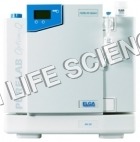
Ultra Pure Water System
MOQ : 1 Unit
Ultra Pure Water System Specification
- Output Water Quality
- Resistivity up to 18.2 Mcm at 25C
- Inlet Water Requirement
- Tap Water or Pre-treated Water
- Bacteria Level
- <1 CFU/ml
- Conductivity of Output Water
- <0.056 S/cm
- Purification Stages
- Multi-stage including pre-filtration, RO, UV, UF and final polishing
- Operation
- Fully Automatic with User Friendly Interface
- Usage/Application
- Genomics, Proteomics, Cell Culture, HPLC, Clinical Analyzer
- Organic Carbon Level
- 5 ppb TOC
- Mounting Type
- Floor Standing
- Filtration Capacity
- 10-40 L/hr (depending on model)
- Noise Level
- 60 dB(A)
Ultra Pure Water System Trade Information
- Minimum Order Quantity
- 1 Unit
- Payment Terms
- Cheque
- Supply Ability
- 20 Units Units Per Month
- Delivery Time
- 4-6 Week
- Sample Available
- No
- Packaging Details
- International Standard.
- Main Domestic Market
- Punjab, Rajasthan, Uttarakhand, Haryana, Uttar Pradesh, Himachal Pradesh, Delhi, Chandigarh
About Ultra Pure Water System
Ultra Pure Water System is most commonly utilized in semiconductor industries and laboratories where even single ion can alter or harm whole processing system. It is known to operate on principle of de-ionization and reverse osmosis thus results in removal of all kinds of solid & dissolved impurities including heavy metals & pathogens. This is completely automatic system which is provided with digital screen for monitoring & setting required parameters. It has been equipped with UV source which ensures complete elimination of all kinds of microorganisms. Ultra Pure Water System is also required for advanced techniques including HPLC.
Elga water is a part of Veolia lab water. water purification is often a complex process that incorporate multiple technologies into a single purification system. it may help you for during the sample preparation and many more analysis or application.
We have type I or type II system both. we also have such system in which you will get the type I water quality though the direct tap water.
for more details drop your enquiry.
Advanced Multi-Stage Purification
Utilizing pre-filtration, RO, UV, UF, and final polishing, this system removes particulates, organic carbon, bacteria, and ions, providing ultra pure water suitable for the strictest analytical and research requirements. Its integrated piping and alarm for filter change ensure reliable and efficient operation.
Precision and Flexibility for Laboratory Applications
Equipped with a borosilicate glass water path and microprocessor-based digital controls, the system offers precise monitoring and adjustment of water quality parameters. With up to 2% accuracy and flow rates from 10 to 40 L/hr, it adapts to varying project needs while maintaining consistent performance.
User-Friendly Operation and Robust Design
This floor-standing unit features fully automatic controls, LCD digital display, automatic start/stop, and water level management. Manufactured from stainless steel and high-grade plastic, it ensures longevity and temperature resistance up to 80C, allowing safe and reliable operation in demanding environments.
FAQs of Ultra Pure Water System:
Q: How does the Ultra Pure Water System ensure water purity for sensitive laboratory applications?
A: The system employs a multi-stage purification process, including pre-filtration, RO, UV sterilization, UF, and final polishing. This combination efficiently reduces particulates, bacteria, and organic carbon to levels suitable for genomics, proteomics, cell culture, and HPLC, delivering up to 18.2 Mcm resistivity and 5 ppb TOC.Q: What is the process for starting and operating the Ultra Pure Water System?
A: Operation is fully automatic; simply ensure the system has either tap or pre-treated inlet water, power supply connected to 220V AC, and set the desired flow rate via the user-friendly LCD digital display. Automatic water level control and start/stop functions simplify ongoing operation.Q: When should the filter cartridges be replaced in the system?
A: The integrated alarm system alerts users when a filter change is necessary, helping maintain optimal water quality. Replacement frequency depends on water usage and inlet water quality but can typically be determined by system notifications.Q: Where is this Ultra Pure Water System best utilized?
A: This system is specially designed for laboratories, industrial facilities, pharmaceutical production, and research institutes in India, where ultra pure water is required for precision analyses and processes.Q: What benefits does inbuilt UV sterilization and heating provide?
A: Inbuilt UV sterilization ensures minimal bacteria levels (<1 CFU/ml) for safe use in cell culture and clinical analysis, while the heating element (up to 80C, 180W) enables temperature control for a range of application requirements.Q: How accurate are the water quality and flow rate measurements?
A: The microprocessor-based digital controls and LCD display provide real-time readings and adjustments, maintaining accuracy within 2% for both water quality parameters and flow rate across all models.Q: What steps are involved in adjusting the flow rate for different applications?
A: Users can modify the flow rate, ranging from 10 to 40 liters per hour, by using the interface controls on the digital display. This flexibility allows the system to accommodate varying sample volumes and throughput demands in multiple laboratory processes.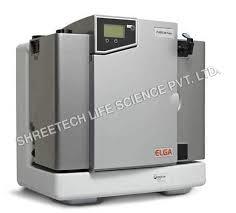
Tell us about your requirement

Price:
Quantity
Select Unit
- 50
- 100
- 200
- 250
- 500
- 1000+
Additional detail
Mobile number
Email

More Products in Water Purification Systems Category
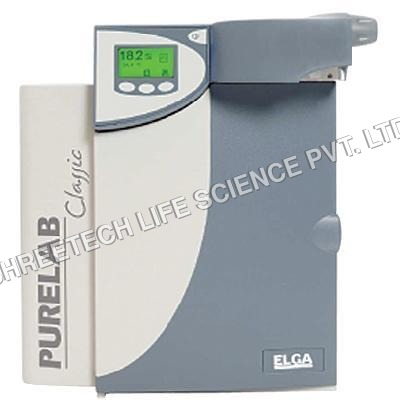
Purelab Classic
Minimum Order Quantity : 1 Unit
Type : Other, Water Purification System
Application : Laboratory Ultrapure Water Production
Shape : Rectangular
Material : Polycarbonate & Stainless Steel
Features : Compact Design, UserFriendly Interface, Continuous Monitoring
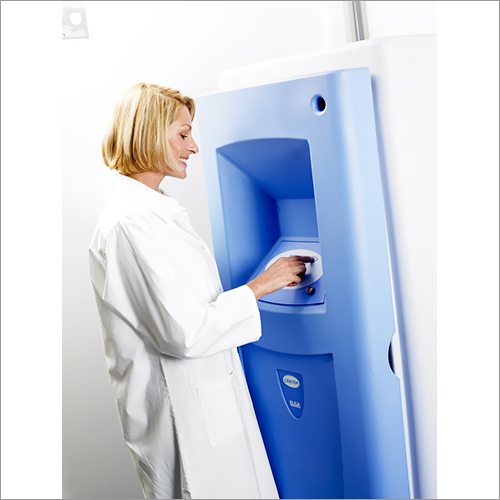
Elga Water Purification Systems
Minimum Order Quantity : 1 Unit
Type : Other, Water Purification System
Application : Laboratory, Pharmaceutical, Clinical, Research, Chemical Analysis
Shape : Rectangular
Material : ABS Plastic, Stainless Steel
Features : Compact Design, Low Power Consumption, Automated Operation, Easy Installation and Maintenance, Integrated Filtration Stages, LCD Display
PURELAB Prima 7-15-30
Minimum Order Quantity : 1 Unit
Type : Other, PURELAB Prima 71530 Water Purification System
Application : Laboratory water purification, feed to ultrapure water systems
Shape : Rectangular
Material : Stainless steel and advanced polymer components
Features : Automatic monitoring, easytoservice modules, low maintenance, robust design, water quality monitoring
Purelab Option Q
Minimum Order Quantity : 1 Unit
Type : Laboratory equipment, Other
Application : Water purification for laboratory use
Shape : Compact rectangular
Material : Plastic and metal
Features : Highpurity water production; userfriendly design


 Send Inquiry

Our Products
- Lovibond Colour Measurement Instruments
- Lovibond Water Testing Equipments
- Water Purification Systems
- SOCOREX Precision Liquid Volumetry
- Laboratory Viscometers
- Rheometers
- BLUESEN SMART WATER ANALYZERS
- Testing and Measuring Equipment
- Online Turbidity Meter
- Electrical Testing and Measuring Equipment
- Multifunction Meter
- Measuring tools and Equipment
- Digital Sensor

Plot No. 6, Club Drive, M.G. Road, GhitorniNew Delhi - 110030, India

Mr Sumit Bhatia
(Director)
Mobile :08045477157
 Send Inquiry
 Send SMS
Developed and Managed by Infocom Network Private Limited.
 English
 Spanish
 French
 German
 Italian
 Chinese (Simplified)
 Japanese
 Korean
 Arabic
 Portuguese